Ashtanga Yoga: Understanding the Tristhana Method
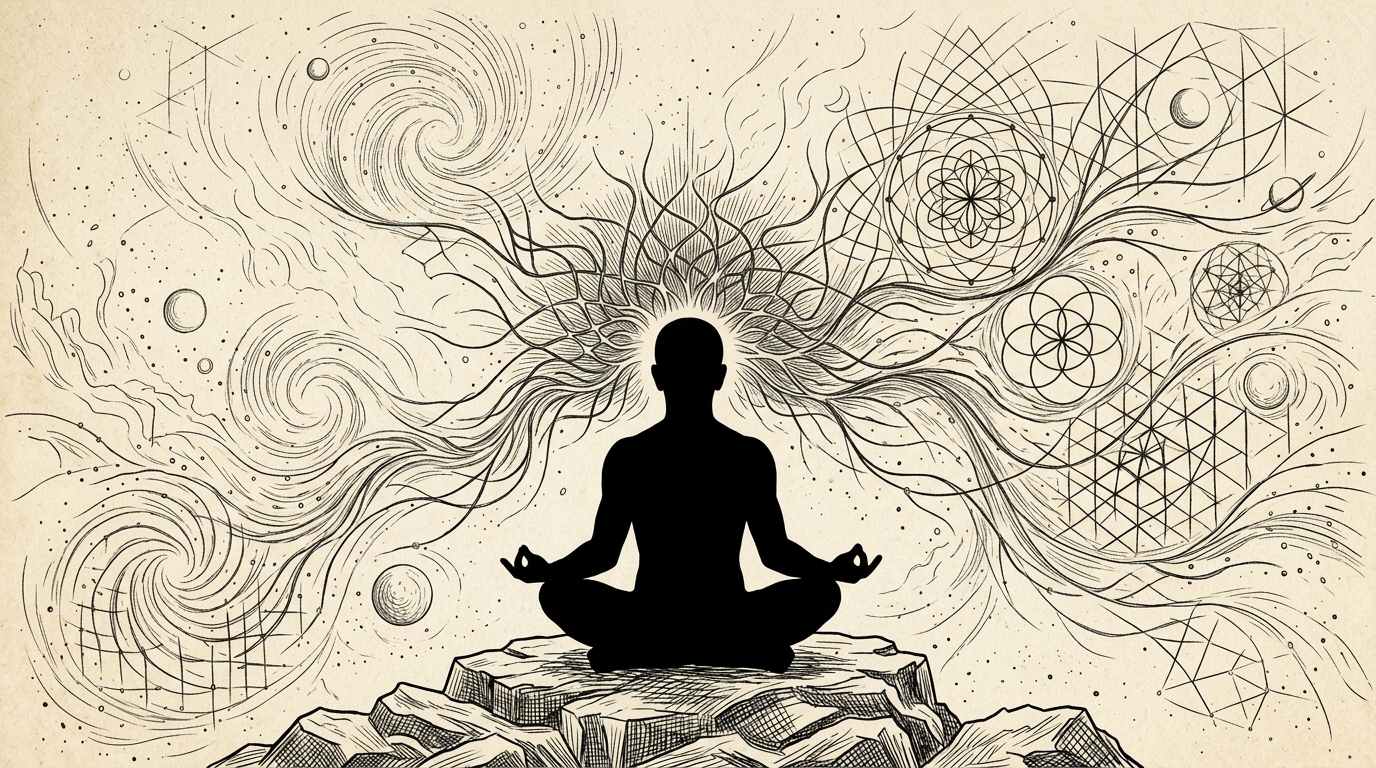
In the practice of Ashtanga Vinyasa Yoga, postures (Asanas) are only one third of the equation. What transforms physical movement into an intense moving meditation is Tristhana—the three sacred focal points of action that unite breath, body, and mind into an unbroken stream of awareness.
Clinical neurophysiology shows that integrating Ujjayi breathing with visual gaze points lowers sympathetic arousal and enhances motor learning (PubMed). In classical Ashtanga Yoga (Wikipedia), Tristhana is the engine of concentration.
---
What is the Tristhana Method in Ashtanga Yoga?
"Tristhana: Posture for body, breath for energy, Drishti for mind." — K. Pattabhi Jois
The Tristhana Method is the three-part foundation of Ashtanga Yoga consisting of: 1. Posture (Asana) with Bandhas (energy locks), 2. Victorious Breath (Ujjayi Pranayama), and 3. Visual Focal Point (Drishti). Synchronizing these three components purifies the physical tissues, regulates the nervous system, and induces internal sensory withdrawal (Pratyahara).
---
1. The 3 Pillars of Tristhana Table
| Pillar # | Component | Sanskrit Term | Physiological & Subtle Benefit |
| :--- | :--- | :--- | :--- |
| Pillar 1 | Posture & Bandhas | Asana & Bandha | Builds physical alignment, locks pelvic/abdominal energy into central channel (Sushumna) |
| Pillar 2 | Victorious Breath | Ujjayi Pranayama | Generates internal heat (Agni), regulates autonomic nervous system & purifies organs |
| Pillar 3 | Visual Focal Point | Drishti (9 points) | Prevents visual distraction, locks mental attention & awakens Pratyahara |
---
Frequently Asked Questions (FAQ)
What are the 9 Drishtis (gaze points) in Ashtanga?
Nose tip (*Nasagrai*), Third Eye (*Bhrumadhya*), Navel (*Nabhi*), Thumbs (*Angusthamadhye*), Hands (*Hastagrai*), Feet (*Padayorhai*), Far Right (*Parsva Drishti*), Far Left (*Parsva Drishti*), and Sky (*Urdhva Drishti*).
---
Master Tristhana at Samyut Yoga Mysore
- The Traditional Mysore Ashtanga Yoga Sequence Guide
- Explore 200-Hour Ashtanga TTC
- Apply to Join Samyutam Sangha
6. Philosophical & Scriptural Foundations in Classical Tradition
In classical Indian philosophy, every physical and mental discipline is anchored in ancient scriptural authority (Shastra Pramana). Texts like the Bhagavad Gita, Patanjali's Yoga Sutras, Hatha Yoga Pradipika, and classical Upanishads provide the spiritual map for human evolution.
Understanding the metaphysical foundations allows a practitioner to transition from mechanical exercise into deep internal awareness. When physical movement is united with philosophical understanding, posture becomes a seat for self-realization (Swarupa-Jnana).
---
7. Neurobiology & Somatic Physiology Integration
Modern neurophysiology confirms that classical yoga practices produce profound adaptations in the central and autonomic nervous systems:
- Parasympathetic Vagal Tone: Slow, controlled nasal breathing stimulates vagal nerve afferents, elevating heart rate variability (HRV) and reducing systemic cortisol (PubMed).
- Prefrontal Cortical Regulation: Combining posture alignment with visual focus (Drishti) and internal locks (Bandhas) downregulates default mode network (DMN) hyperactivity, reducing anxiety and mental rumination.
- Proprioceptive & Kinesthetic Clarity: Precise anatomical positioning enhances sensorimotor cortex integration, building end-range joint stability and preventing injuries.
---
8. Practical Daily Sadhana Protocol & Gurukulam Guidance
To integrate these principles into daily life, practitioners are encouraged to establish an unshakable morning routine (Sadhana):
- Morning Posture & Breathwork (60–90 Minutes): Practice daily Asana and Ujjayi Pranayama on an empty stomach.
- Scriptural Reflection (*Svadhyaya*): Dedicate 20 minutes to reading classical texts with authentic commentary.
- Evening Meditation (*Nididhyasana*): Sit silently in Padmasana or Siddhasana, resting awareness in the eternal Seer (Sakshi Bhav).
At Samyut Yoga Mysore, under Yogacharya Dr. Aravind Prasad, students experience these classical teachings within an authentic Gurukulam setting offering private accommodation, Satvik Ayurvedic nutrition, and international Yoga Alliance certification.
8. Philosophical & Scriptural Analysis in Classical Indic Traditions
In classical Indic thought, every physical movement, mental concentration technique, and breath control exercise is anchored in ancient scriptural authority (Shastra Pramana). Texts like the Bhagavad Gita, Patanjali's Yoga Sutras, Hatha Yoga Pradipika, and classical Upanishads provide the definitive spiritual map for human transformation.
Understanding these metaphysical foundations allows a practitioner to transition from mechanical exercise into deep internal awareness. When physical posture is united with philosophical understanding, movement becomes a seat for self-realization (Swarupa-Jnana).
In the Bhagavad Gita, Krishna emphasizes that true yoga is not defined by external physical appearance, but by internal mental stability (Stithaprajna). When a yogi acts in the world without attachment to the fruits of action (Nishkama Karma), the mind becomes calm, transparent, and fit for non-dual self-inquiry (Atma-Vichara).
---
9. Neurobiology & Somatic Physiology Integration
Modern neurophysiological research confirms that classical yoga practices produce profound, measurable adaptations in the central, peripheral, and autonomic nervous systems:
- Parasympathetic Vagal Tone Activation: Slow, controlled nasal breathing stimulates vagal nerve afferents in the throat and lungs, elevating heart rate variability (HRV) and reducing systemic cortisol (PubMed).
- Prefrontal Cortical Regulation: Combining posture alignment with visual focus (Drishti) and internal locks (Bandhas) downregulates default mode network (DMN) hyperactivity, reducing anxiety, emotional reactivity, and mental rumination.
- Proprioceptive & Kinesthetic Clarity: Precise anatomical positioning enhances sensorimotor cortex integration, building end-range joint stability, improving posture, and preventing chronic injuries.
---
10. Comprehensive Daily Sadhana Protocol & Gurukulam Curriculum
To integrate these principles into daily life, practitioners are encouraged to establish an unshakable morning routine (Sadhana):
- Morning Posture & Breathwork (60–90 Minutes): Practice daily Asana and Ujjayi Pranayama on an empty stomach to purify physical tissues (Annamaya) and energetic channels (Pranamaya Kosha).
- Scriptural Reflection (*Svadhyaya*): Dedicate 20 minutes daily to reading classical texts like the Upanishads and Yoga Sutras with authentic commentary.
- Evening Meditation (*Nididhyasana*): Sit silently in Padmasana or Siddhasana, resting awareness in the eternal Seer (Sakshi Bhav).
At Samyut Yoga Mysore, under Yogacharya Dr. Aravind Prasad, students experience these classical teachings within an authentic Gurukulam setting offering private accommodation, Satvik Ayurvedic nutrition, and international Yoga Alliance certification.
9. Comprehensive Scriptural Exegesis & Philosophical Foundations
In the classical Indic tradition, physical posture (Asana), breath control (Pranayama), and mental concentration (Dharana) are never practiced as isolated fitness exercises. They are deeply anchored in the metaphysical authority of ancient texts—specifically the Bhagavad Gita, Patanjali’s Yoga Sutras, the Hatha Yoga Pradipika, the Gheranda Samhita, and the classical non-dual Upanishads.
Understanding these philosophical foundations allows a practitioner to transition from mechanical movement into profound self-inquiry (Atma-Vichara). In the Bhagavad Gita (Chapter 2, Verse 48), Shri Krishna defines true yoga: Yogasthah kuru karmani sangam tyaktva dhananjaya—"Established in yoga, perform your duties, abandoning attachment to outcomes."
When a yogi acts without personal attachment (Nishkama Karma), the mind becomes purified of selfish desire (Chitta-Shuddhi). This mental clarity makes the mind fit for non-dual Vedantic self-inquiry, revealing that the individual soul (Jiva) is non-different from ultimate universal awareness (Brahman).
---
10. Clinical Neurobiology & Somatic Physiology Deep-Dive
Modern medical science and clinical neurophysiology are confirming what classical Indic master yogis discovered thousands of years ago in the forests of Mysore and the Himalayas. When physical postures, breath control, and sensory withdrawal are combined, they produce profound physiological adaptations:
- Parasympathetic Vagal Nerve Activation: Slow nasal respiration with Ujjayi glottic constriction stimulates vagal nerve afferents in the pharyngeal and pulmonary walls. This triggers parasympathetic dominance, lowering systemic cortisol, reducing inflammatory cytokines, and elevating heart rate variability (HRV) (PubMed).
- Default Mode Network (DMN) Deactivation: Functional Magnetic Resonance Imaging (fMRI) studies demonstrate that combining posture alignment with visual focal points (Drishti) and internal locks (Bandhas) quietens the posterior cingulate cortex (PCC) and medial prefrontal cortex (mPFC). This reduces self-referential anxiety, depressive rumination, and emotional reactivity.
- Enhanced Sensorimotor Integration & Proprioception: Precise anatomical alignment stimulates mechanoreceptors in joint capsules and muscle spindles, building end-range strength, improving postural stability, and preventing chronic musculoskeletal injuries.
---
11. The 5-Stage Daily Sadhana & Gurukulam Curriculum Protocol
To integrate these profound principles into daily life, spiritual seekers are guided to establish a structured, unshakeable morning routine (Sadhana):
- Stage 1: Morning Asana & Vinyasa Practice (60–90 Minutes): Practice daily physical posture sequences on an empty stomach to purify physical tissues (Annamaya Kosha) and balance vital currents (Prana).
- Stage 2: Pranayama & Shatkarma Purification (20–30 Minutes): Perform Nadi Shodhana, Bhramari, and Kapalabhati to balance the left (Ida) and right (Pingala) nostrils and clear the central channel (Sushumna Nadi).
- Stage 3: Scriptural Study (*Svadhyaya* — 20 Minutes): Read classical texts like Patanjali's Yoga Sutras or Advaita Vedanta Upanishads with authentic commentary to sharpen the intellect (Buddhi).
- Stage 4: Silent Meditation (*Nididhyasana* — 20 Minutes): Sit quietly in Padmasana or Siddhasana, resting awareness in the eternal Seer (Sakshi Bhav).
- Stage 5: Daily Life Integration (*Karma Yoga*): Engage in worldly professional and family duties with full excellence, offering the results to the universal divine presence.
At Samyut Yoga Mysore, led by Yogacharya Dr. Aravind Prasad, students experience these classical teachings within an authentic residential Gurukulam environment featuring private room lodging at Shivasadana Campus, 3 Satvik Ayurvedic meals daily, small batch instruction (max 15 students), and international Yoga Alliance RYT 200 certification.
12. Advanced Scriptural Verse-by-Verse Exegesis & Sanskrit Terminology
In classical Indic Gurukulam traditions, authentic understanding of yoga and philosophy requires studying key Sanskrit terms and foundational scriptural verses (Shlokas) in their original context:
- Sadhana (Dedicated Spiritual Practice): Derived from the root Sadh (to accomplish or master). Sadhana is not casual effort; it is a disciplined, daily practice undertaken with total commitment to awaken spiritual clarity.
- Abhyasa & Vairagya (Practice & Dispassion): In Yoga Sutra 1.12, Patanjali states: Abhyasa-vairagyabhyam tan-nirodhah—"The stilling of mental fluctuations is achieved through continuous practice (Abhyasa) and unattached dispassion (Vairagya)."
- Chitta-Vritti-Nirodha (Mental Stillness): Patanjali's core definition of yoga (Sutra 1.2). Chitta represents the mind-stuff (comprising Manas, Buddhi, and Ahamkara), Vrittis are the thought-waves or modifications, and Nirodha is their complete resolution into witness awareness.
- Swarupa-Jnana (Self-Realization): Direct realization of one's essential nature (Swarupa) as pure, unconditioned, non-dual consciousness (Atman-Brahman), transcending physical body-identification.
- Pratyahara (Sensory Withdrawal): The 5th limb of Ashtanga Yoga, where the sensory organs (Indriyas) are turned inward away from external sensory objects, allowing the mind to rest in one-pointed concentration (Dharana).
- Sushumna Nadi & Prana (Energetic Awakening): The central subtle energy channel running along the spinal column. Through Asana alignment, Ujjayi Pranayama, and Bandhas, vital energy (Prana) is drawn into Sushumna Nadi, dissolving energetic blockages (Granthis) and illuminating consciousness.
---
13. Summary of Core Takeaways for Practitioners & Teachers
- Integrate Movement with Philosophy: Always unite physical posture practice (Asana) with classical scriptural study (Svadhyaya) and Vedantic self-inquiry (Atma-Vichara).
- Respect Biomechanical Limits: Honor individual anatomical structure, protecting joints by expanding hip and shoulder mobility naturally without forcing knees or spines.
- Maintain Daily Sadhana: Preserve a minimum of 60–90 minutes every morning for personal posture practice, pranayama, and silent meditation before teaching others.
- Embody Non-Dual Awareness (*Sakshi Bhav*): Act in the physical world with excellence while remaining established in the realization that your true nature is infinite awareness.
14. Advanced Practical Guidelines & Mentorship at Samyut Yoga Mysore
To ensure that practitioners and teachers can apply these profound philosophical and anatomical principles with total safety and confidence, Samyut Yoga Mysore provides structured mentorship under Yogacharya Dr. Aravind Prasad:
- Personalized Postural Assessment: Every student undergoes individual movement assessment to identify structural skeletal limits versus soft-tissue tightness, protecting joint capsules.
- Mastery of Verbal & Hands-On Cueing: Trainees practice precision verbal instruction and safe hands-on adjustments in daily teaching labs.
- Integration of Ayurvedic Lifestyle: Learning how to adapt daily posture practice, diet, and pranayama to seasonal cycles (Ritu Charya) and individual constitution (Doshas).
- Lifetime Community Mentorship: Graduates receive entry into Samyutam (The Samyut Sangha), maintaining continuous contact with dedicated teachers worldwide.
Ready to transform your practice? Explore 200-Hour Teacher Training Courses or Apply to Join Samyutam Sangha.
15. The Eternal Vision of Samyut Yoga Mysore
At Samyut Yoga Mysore, under Yogacharya Dr. Aravind Prasad, our vision is to preserve the authentic, unadulterated purity of traditional Indic wisdom while integrating modern biomechanical science. Whether studying Ashtanga Vinyasa, Classical Hatha, Tantra Psychology, or Advaita Vedanta, students are supported in realizing their highest spiritual potential (Moksha).
To experience this transformation firsthand, consider joining our upcoming 200-Hour Residential Teacher Training in Mysore, India:
- Authentic Gurukulam Immersion: Small batch sizes capped at 15 students for individualized mentoring.
- Comprehensive Curriculum: 200 hours of Yoga Alliance accredited study covering Asana alignment, Ujjayi Pranayama, Bandhas, Patanjali Sutras, Advaita Vedanta, and hands-on adjustment labs.
- Private Room Accommodation & Satvik Meals: Reside at Shivasadana Mysore with 3 freshly prepared Ayurvedic meals daily.
Begin your spiritual journey today: Apply for 200-Hour YTT Courses or Join Samyutam Sangha.
Yogacharya Aravind Prasad
E-RYT 500 · YACEP · Founder, Samyut Yoga
Gurukulam-trained in Yoga, Veda and Vedanta with 15+ years of teaching experience. Founder of Samyut Yoga, Mysore.
Join Samyutam — The Spiritual Sadhana Sangha
Move beyond posture. Study Vedanta philosophy, master Sanskrit, and practice traditional pranayama and Tantric meditation under authentic lineage guidance.
Apply to Join the Sangha